

Sleeping respiratory rate in dogs: a 30-second heart check
A vet explains how to count your dog's sleeping respiratory rate in 30 seconds, what's normal, how high is too high, and when to call your vet.

Published · 7 min read
Let me guess. Your vet listened to your dog's chest for a good long while, then sent you home with homework: count his breaths while he sleeps. So now you're crouched by the dog bed at 10 p.m. with your phone timer, trying to decide whether a twitching paw and a muffled woof count. And the reason behind all of it is two words nobody wants to hear: heart disease.
Take a breath. Let's walk through it the way I would if you were sitting across from me.
Checking the sleeping respiratory rate in dogs with heart disease is one of the most useful jobs you can do at home. It takes 30 seconds, and it can pick up trouble before your dog looks sick.
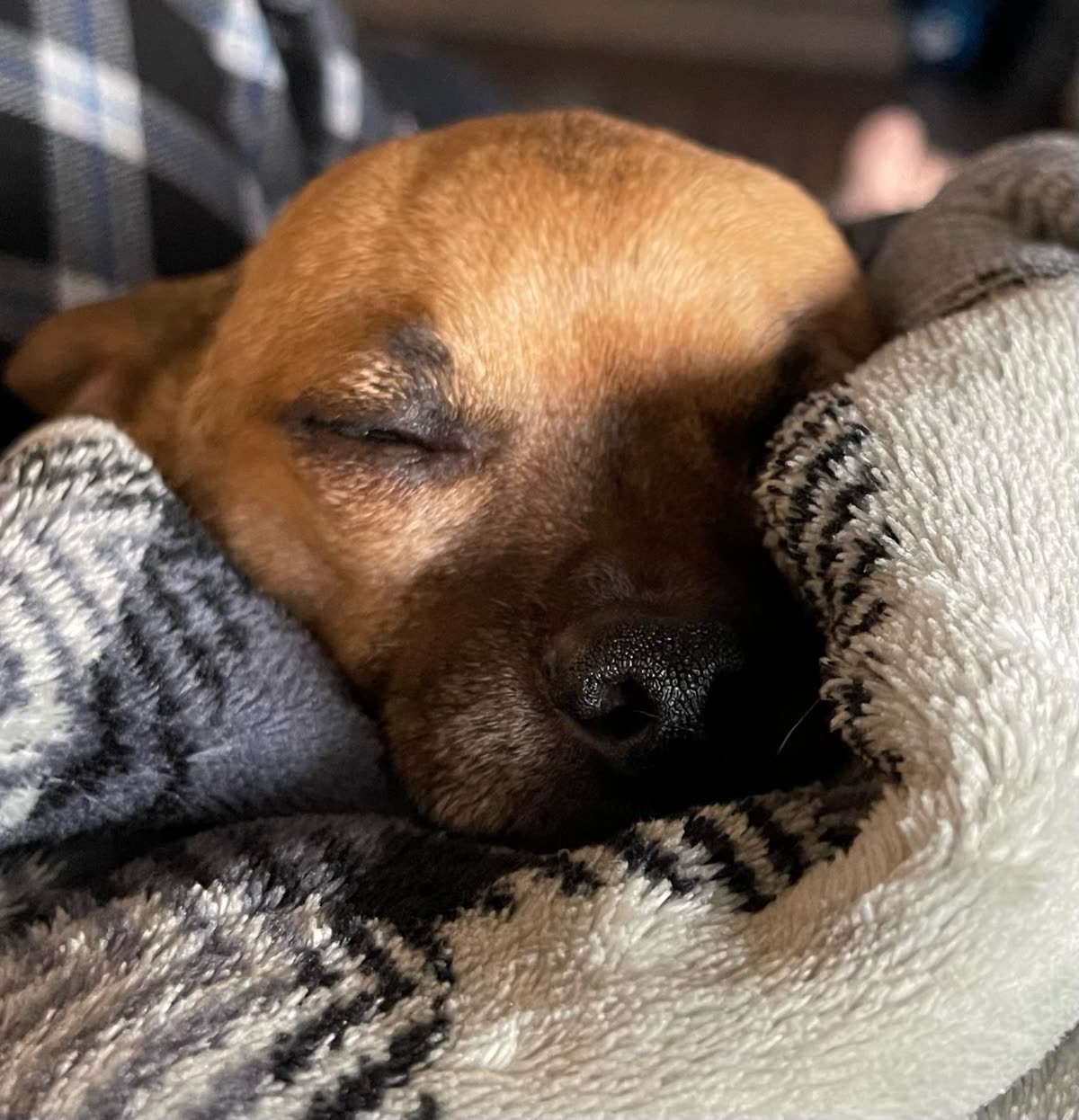
Why your vet wants you counting breaths
When a heart starts to struggle, pressure can back up into the lungs and fluid leaks into them. That's what vets mean by congestive heart failure. Lungs with fluid in them are harder work, so your dog breathes faster to keep up.
Sleep is the best time to see it. When your dog is awake, heat, excitement and the mail carrier all push his breathing up, and that's normal. Asleep, none of that is going on, so a faster rate stands out.
The guidelines vets use for the most common heart disease in dogs, a leaky mitral valve, come from the American College of Veterinary Internal Medicine (ACVIM), and they're clear on this. Of the things you can watch at home, a rise in resting breathing rate above your dog's usual is the best early clue that things are about to get worse. Catching it early can mean a medicine change and a recheck instead of a night in the hospital.
How to do the 30-second count
This is the method from a Texas A&M cardiology handout. Here's how it goes:
- Wait until he's sound asleep. Sleeping quietly is best. Lying calmly awake is second best. If his paws are twitching, he's probably dreaming, so give him a few minutes.
- Watch his chest or his side. One breath is one rise and one fall. In and out counts once, not twice.
- Count for 30 seconds on your phone's timer.
- Double it. Twelve breaths in 30 seconds is 24 breaths a minute.
- Write it down with the date and time, and whether he was asleep or just resting. The sleeping number usually runs a little lower than the resting one.
Why 30 seconds? Some handouts say count for 15 seconds and multiply by 4. Others say count a full minute. They all work. Thirty seconds is a nice middle: one miscounted breath only moves the answer by two, and he's less likely to wake up and wander off halfway through. Every vet's a little different on this, and there's no wrong way here.
Does your cat have heart disease too? Same check. Just don't count while she's purring.
You don't need anything fancy. A phone timer and a notebook do the job. Or use the breath counter in WagNote: tap once per breath while he sleeps, it does the math, and every count lands on a chart you can show your vet. Use whatever you'll actually keep doing.
What's a normal sleeping respiratory rate in dogs?
Most dogs and cats, with or without heart disease, breathe somewhere between 15 and 30 times a minute when they're asleep or resting calmly. Typically, a sleeping dog sits around 15 to 20. Anything under 30 is normal, and lower than 15 is usually fine as long as your dog is otherwise healthy. So if he's in the teens, relax. That's a good number.
How many breaths a minute is too many?
Above 30 is where vets start to differ. The line you'll see on most cardiology handouts is about 30: a sleeping rate that stays above about 30 breaths a minute is considered high. Some clinics use 35.
Typically, I say 40, but that's a vet call. I also watch for a big jump from your dog's own normal. If he usually sleeps at 15 to 20 and now he's at 35, that might be a problem, even though it's under 40. Every vet's a little different here, and yours may set a lower number for your dog. That's why the most useful question you can ask is "What number do you want me to call you about?" Then write the answer on the fridge, or put it in WagNote so the whole family knows the number.
Notice the word "stays." One high count isn't the same thing as a high rate. More on that in a minute.
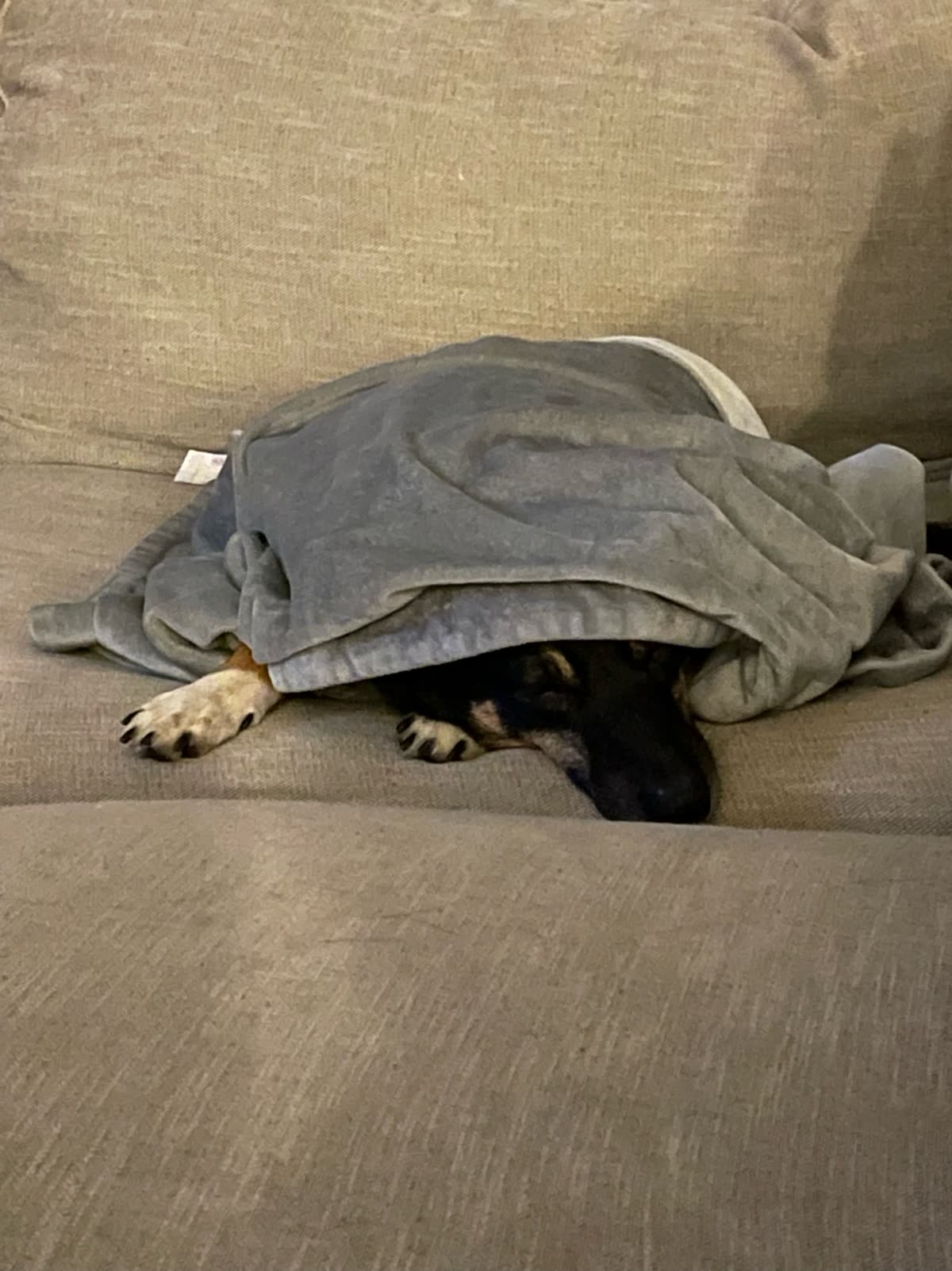
Your dog's own normal matters too
Here's the thing: whatever line your vet gives you is a ceiling, not a target. A change from your dog's usual number can matter even when he's still under the line.
The University of Missouri's cardiology team puts a number on it. They want a call if the rate goes up 20 to 30 percent or more over three days in a row. So if your dog usually sleeps at about 16 breaths a minute and he's been at 20 or more three nights running, that's worth a call, even though he's nowhere near 30.
That's why the first week of counting matters so much. It's how you and your vet learn what normal looks like for your dog.
And here's something that surprises people: after a while, most owners get a feel for it. They look over at the dog bed and think, "Mm, that's normal," because they're used to his rhythm. And they can tell quickly when something's wrong.
How often should you count?
When you're starting out, vets usually have you count once a day for about a week. That gets you comfortable with it, and it gives you both a real baseline.
After that, it depends on where your dog is:
- He's in active heart failure: you're counting several times a day.
- He's on heart medicine: get in the habit of counting at night, every night.
- He has heart disease but isn't on medicine yet: not every dog needs to count yet. Once the heart changes are far enough along that your vet wants you watching, it's often once or twice a week, and sometimes daily.
Not every vet sets it up the same way, so go with what yours asks for.
Why every night? Because if you catch this early, you're much better off. Catching a slightly higher sleeping rate is a lot better than finding out when he's in full-blown heart failure.
Between the counts, the medicine times and the recheck dates, there's a lot to keep straight. Honestly, that's why I built WagNote (full disclosure: it's my app). I kept seeing owners struggle to keep track of everything with conditions like this, so I put it all in one place.
I got a high number. Now what?
First, don't panic, and don't decide anything off one count. Recount a few times over the next couple of hours while he's properly asleep. A warm room can push a single count up, and so can a dog who's only half asleep.
If it's still high, call your vet. Often that means a recheck within a day or two, so the medicine can be adjusted, but that's up to your vet. Let them make that decision, or help you make it.
I know "fluid on the lungs" sounds frightening. Caught at this stage, it's often a medicine change and a recheck. That's the whole point of counting.
The exception is a high count that comes with other trouble. If he's working hard to breathe, can't settle, has pale or bluish gums, or collapses, that isn't a recount situation. Go to your vet or an emergency clinic now, especially after hours.
What else to watch at home
The breath count is the headline, but write these down next to it, with the date:
- Cough or gagging. How often, and when it happens.
- Restless nights. Moving around a lot, changing positions, not settling.
- Walks. Tiring sooner, lagging behind, wanting to turn for home early.
- Appetite. Eating less than usual.
- Belly. Looking bigger or rounder than it did.
- Mood. Quieter than usual, less interested in you and the house.
"Up from 18 to 26 over three nights, and he coughed twice last night" tells your vet far more than "he seems a bit off."
If you do one thing this week: count your dog's breaths once a day while he's sound asleep, for seven days, and write each number down, or tap it into WagNote's breath counter and watch the chart. Your vet will be thrilled, and your dog will sleep right through it.
What to track at home
- Sleeping breaths Count for 30 seconds while your dog is sound asleep, double it, and write it down with the date and time. The trend matters as much as any one number.
- Cough How often, and when. A new cough, or more coughing than usual, is worth telling your vet.
- Restless nights Moving around a lot, changing positions, not settling. Write it down next to that night's count.
- Walks Tiring sooner or lagging behind can be a sign the heart is having a harder time.
- Appetite Eating less can come with worsening heart failure. Note the date it started.
Questions to ask your vet
- What sleeping breathing rate should make me call you: 30, 35, 40, or a different number for my dog?
- How often do you want me to count, and for how long?
- If the count is high but my dog seems fine, should I recount first or call right away?
- Do you want to see my breathing log at every recheck?
- Who do I call after hours, and which emergency clinic should I use?
When to call your vet
Call your vet if your dog's sleeping breathing rate stays above the number your vet gave you (many vets use somewhere from 30 to 40 a minute) after you've recounted a few times over a couple of hours. Call too if it has crept up 20 to 30 percent or more above his usual number for three days in a row, even if it's still under that line.
Call about a new cough, restless nights, eating less, tiring sooner on walks, or a belly that looks bigger. You don't have to wait for the next recheck.
Call your vet or an emergency clinic now if
Call your vet or an emergency clinic now if your dog is working hard to breathe, has his belly pushing with each breath, can't settle or lie down, has pale, gray or blue gums, coughs up pink foam, faints or collapses. A high breathing count plus any of these can be an emergency, especially after hours.
Sources
- Measuring Your Pet's Breathing Rate, Cardiology Service client handout, Texas A&M University Veterinary Medical Teaching Hospital
- At-Home Monitoring of Pets with Heart Disease, University of Missouri Veterinary Health Center, Cardiology
- ACVIM consensus guidelines for the diagnosis and treatment of myxomatous mitral valve disease in dogs, Keene et al., Journal of Veterinary Internal Medicine (2019)
This is general education from a veterinarian, not advice for your pet. I haven't examined your pet, and only your own vet can. If your pet is in distress, call your vet or an emergency clinic now. Medical disclaimer.