

Is my senior dog in pain? The quiet signs owners miss
Is my senior dog in pain, or just getting old? A vet explains the quiet signs of arthritis, what the vet checks, and what helps at home.

Published · 7 min read
Let me guess. Your dog used to beat you to the door. Now he gets off his bed in stages: front end first, back end a few seconds later. He stands at the bottom of the stairs and stares up them like he's waiting for an elevator. The car? He puts his front feet up and waits for you to handle the rest. You keep telling yourself he's just getting old. And now you're starting to wonder: is my senior dog in pain?
Often the answer is yes, and one of the most common reasons is arthritis. The good news: there's a lot we can do about it.
Take a breath. Let's walk through it the way I would if you were sitting across from me.
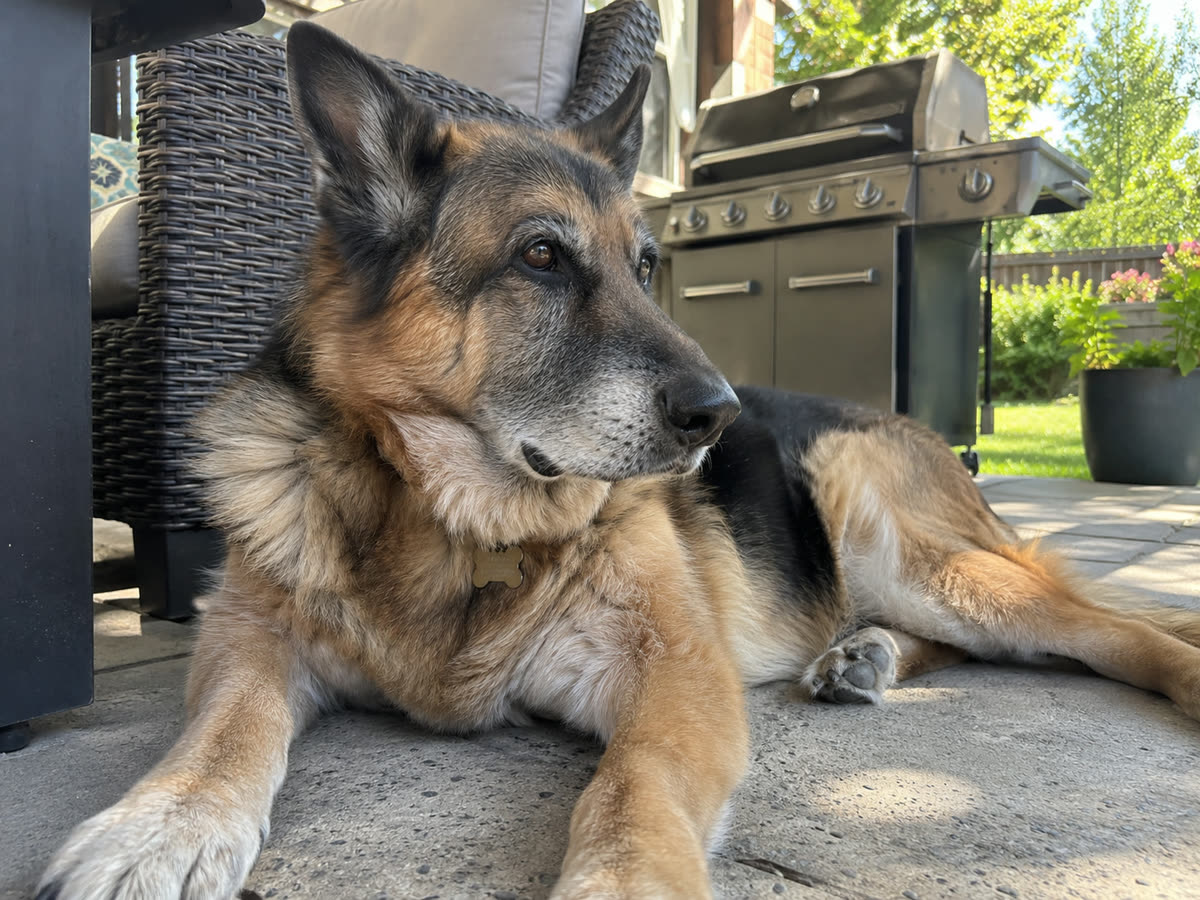
Is my senior dog in pain, or just getting old?
Here's the thing: old age isn't a disease. A gray muzzle is normal. Struggling to get up, skipping the stairs and giving up the couch usually aren't. A lot of what owners chalk up to age is actually pain.
Let's start with arthritis. Vets call it osteoarthritis. The smooth cartilage that cushions a joint wears thin. The joint gets inflamed, and it hurts to move. Hips, elbows, knees and the spine are the usual spots. It comes on slowly and it doesn't go away.
Slow, creeping arthritis isn't an emergency. Sudden pain is different: if he can't get up, cries out when he moves, drags a paw, or his belly looks swollen and tight, call now. The full list is at the end.
Why dogs are so good at hiding it
Dogs don't complain the way we do. Your dog isn't going to limp over and tell you his hip is killing him. He just quietly does less. He leans on his good legs and skips the jump he doesn't want to make. Mostly, he naps a little longer.
It creeps in over months or years, so it looks like old age. Think back two or three years. Did he take the stairs at a run, or hop in the car? Compare then and now.
Pain also looks different from dog to dog. Some sleep more, some pace more. Some get vocal, some go quiet. If it's out of his ordinary, think pain.
Signs of pain in senior dogs: what I look for
Here's what arthritis pain tends to look like at home:
- Slow to get up, especially after a nap. A dog with sore hips often pulls himself up with his front legs instead of pushing up with his back legs. He may be stiff for the first few steps, then loosen up.
- Trouble lying down. Lots of circling, or starting to lie down and changing his mind a few times.
- Stairs and jumping. Waiting at the bottom of the stairs, taking them one at a time, or refusing. No more couch, bed or car.
- Slippery floors. Avoiding the kitchen tile or the hardwood, or his legs sliding out.
- Licking one spot. A sore wrist, ankle or knee can cause licking even when the skin looks normal.
- Grumpiness. Not wanting to be brushed or touched in one area, or snapping at the other dog when he never used to.
- Sleep changes. Sleeping more by day, or up and down at night trying to get comfortable. Other things can cause this too, which is one more reason to get it checked.
- Accidents in the house. Asking to go out, or getting down the steps to the yard, can just hurt too much.
- Worn nails. Scuffed back toenails can mean he's dragging his feet because lifting them hurts, or a nerve problem. Either way, it's worth a look.
- Doing less. Lagging on walks, turning for home early, losing interest in play, or a limp that comes and goes. Sometimes the back legs look thinner, because muscle shrinks when a dog uses a leg less.
Get it on video, and start a log
Your vet can't see your dog get up at 6 a.m. You can. Take a short phone video of him getting up after a long nap, and on the stairs if you can. Bring it on your phone. No need to email it unless your vet asks. (Here's what else to bring to the vet.)
Then start a simple log. Tape a calendar to the fridge and mark each evening as a good day or a bad day, plus a word about anything that stood out. Honestly, that's why I built WagNote (full disclosure: it's my app). I kept seeing owners struggle to keep track of everything with conditions like this, so I put it all in one place.
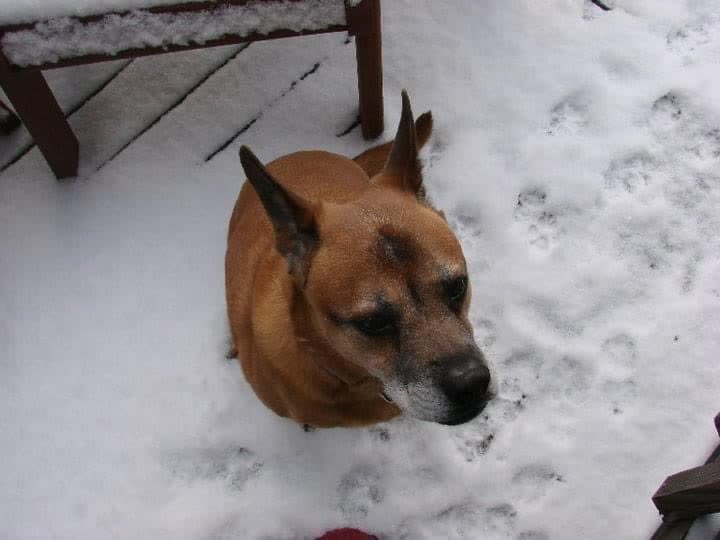
What I do at the visit
First I watch your dog walk and turn. Then I go over him joint by joint. I bend and stretch each one and feel for swelling, and he'll usually let me know which spots he'd rather I left alone. I also check his weight and the muscle on his back legs, because both change what we do next.
Arthritis is usually something I can find on the exam, together with your story and your video. Sometimes I'll add X-rays to get a better look at a joint. Not every vet does it in the same order, and there's no wrong way here.
What actually helps at home
Arthritis can't be cured, but it can be managed, usually with a mix of things rather than one magic pill.
Weight. This is the big one, and you control it. Extra pounds mean extra load on sore joints. If he's carrying a few too many, a slimmer dog is often a more comfortable dog.
Keep him moving, gently. Shorter, more frequent leash walks beat one long weekend hike. Swimming is great for dogs who like it, with you right there and an easy way out. Skip the all-out fetch marathons. He'll disagree. Stay strong.
Fix the floors. Rugs on slick floors, a ramp or steps for the couch and the car, and a gate on the stairs if they're a struggle.
Ask about the extras. I recommend both of these. Joint supplements with glucosamine and chondroitin are worth it, and my favorites are Cosequin, Dasuquin and Movoflex. Ask your vet before you start one, especially if your dog takes other medicines. Rehab is awesome if you can afford it, like an underwater treadmill and exercises a rehab vet shows you. I'm not against acupuncture or laser therapy either.
The pain medicines your vet may bring up
Your vet picks what fits your dog.
- Anti-inflammatory pain pills (NSAIDs). The everyday workhorses. Several are FDA-approved for dogs, such as carprofen (Rimadyl is one brand), meloxicam and grapiprant (Galliprant). Common side effects are vomiting, diarrhea, less appetite and less energy. Stomach ulcers and kidney or liver damage can happen too. If he'll take one daily for the long haul, expect bloodwork first to check his liver and kidneys, and again now and then. Ask for the Client Information Sheet if you don't get one, and if you see side effects, stop giving it and call your vet.
- Add-ons. Some dogs need more than one medicine. Your vet may add gabapentin or amantadine to the anti-inflammatory. Both are people medicines that vets prescribe off-label for dogs, so your vet decides, not the bottle at home.
Which one comes first depends on your dog: his bloodwork, his other medicines, and honestly what's going on in your household. That's a decision for you and your vet.
One planning tip: don't wait until the last pill to ask for a refill. If you call the day before or the day of, it's hard for any clinic to get it done in time. That goes for any medication. Circle the date on the calendar, or let WagNote warn you before the pills run out.
Please don't raid your own medicine cabinet
I get it. He's hurting, it's Sunday night, and there's a bottle of ibuprofen right there. Please don't. People pain relievers like ibuprofen (Advil, Motrin), naproxen (Aleve), aspirin and acetaminophen (Tylenol) aren't safe swaps for a dog. Dogs handle these drugs differently than we do, and depending on the drug they can cause stomach ulcers, kidney damage or liver damage. The same goes for another dog's leftover pills. And don't mix pain medicines on your own, even dog ones, or give one with a steroid like prednisone unless your vet planned it. If he's hurting tonight, call your vet or an emergency clinic.
Good days and bad days
Arthritis is a long game, with good days and bad days, and that's normal. Keep that log going. It's how you'll both know if a new medicine is working. Log his pain score in WagNote each evening and you'll see the trend instead of guessing.
If you do one thing this week: take a short video of your dog getting up from a long nap and walking across your slickest floor, and bring it to your vet. Your vet will love you for it.
What to track at home
- Getting up and lying down Is he pulling up with his front legs, stiff for the first few steps, or circling a lot before he lies down? Note when it's worst, like after a long nap.
- Stairs, jumping and the car Write down what he's stopped doing that he did a year ago: the stairs, the couch, the bed, the car.
- Good days and bad days A quick mark each evening, plus anything that stood out. Over a few weeks it shows the trend better than memory does.
- Weight Extra weight is extra load on sore joints. Weigh him on the same scale each time and write down the date.
- Licking, grumpiness and sleep Where he licks, where he doesn't want to be touched, and whether he's up and down at night.
- After a new medicine What changed (stairs again, back on the couch) and any vomiting, diarrhea, less appetite or less energy, drinking or peeing more, accidents, wobbliness or weakness.
Questions to ask your vet
- Do you think my dog is in pain, and which joints are sore?
- Does he need X-rays, or can we start with the exam?
- Is he at a good weight for his joints? If not, what should we aim for?
- Which pain medicine would you start with for my dog, and why?
- Does he need bloodwork before he starts, and how often after that?
- What side effects should make me call you?
- What changes at home would help him most?
When to call your vet
Book a visit if your older dog is slower to get up, limps or favors a leg, struggles with stairs, has stopped jumping onto the couch or into the car, slips on smooth floors, keeps licking one spot, has scuffed nails on his back toes, is grumpy about being touched, is sleeping more or is restless at night, or has started having accidents. Don't wait for the yearly checkup.
If he's on a pain medicine, call if you see vomiting, diarrhea, less appetite or less energy, drinking or peeing more, new accidents, wobbliness or new weakness, or if you're unsure about the medicine or the schedule.
Call your vet or an emergency clinic now if
Call your vet or an emergency clinic now if your dog suddenly can't stand or walk, drags or knuckles over a paw, cries out when he moves, collapses, has a seizure, or loses control of his bladder or bowels. Go now too if he has trouble breathing, has pale gums, or is restless and pacing with a swollen, tight belly and retching that brings nothing up. The same goes after a fall or other injury, if you see black or bloody stool or vomit, or yellow gums or eyes, or if he got into anyone's pain pills, yours or his own.
Sources
- 15 Signs of Pain in Dogs, American Animal Hospital Association (adapted from Dr. Petty's Pain Relief for Dogs)
- Osteoarthritis, Cornell University College of Veterinary Medicine, Riney Canine Health Center
- Get the Facts about Pain Relievers for Pets, U.S. Food and Drug Administration (content current as of 29 Sept 2022)
This is general education from a veterinarian, not advice for your pet. I haven't examined your pet, and only your own vet can. If your pet is in distress, call your vet or an emergency clinic now. Medical disclaimer.