

Is my old dog sundowning? Dementia signs and what helps
Old dog pacing and confused at night? A vet explains dog sundowning: the dementia signs, what else it could be, and what helps at home and from your vet.

Published · 7 min read
Let me guess. Your old dog has taken up the night shift. Somewhere around 2 a.m. he starts patrolling the hallway, toenails clicking, and he just can't settle. Maybe he barks at nothing, or stares at the wall like it's about to tell him something. You've found him stuck behind the couch, and once or twice he waited at the hinge side of the door for it to open. Then he sleeps half the day like nothing happened. And at some point, in a late-night search, you typed in "dog sundowning."
Take a breath. Let's walk through it the way I would if you were sitting across from me.
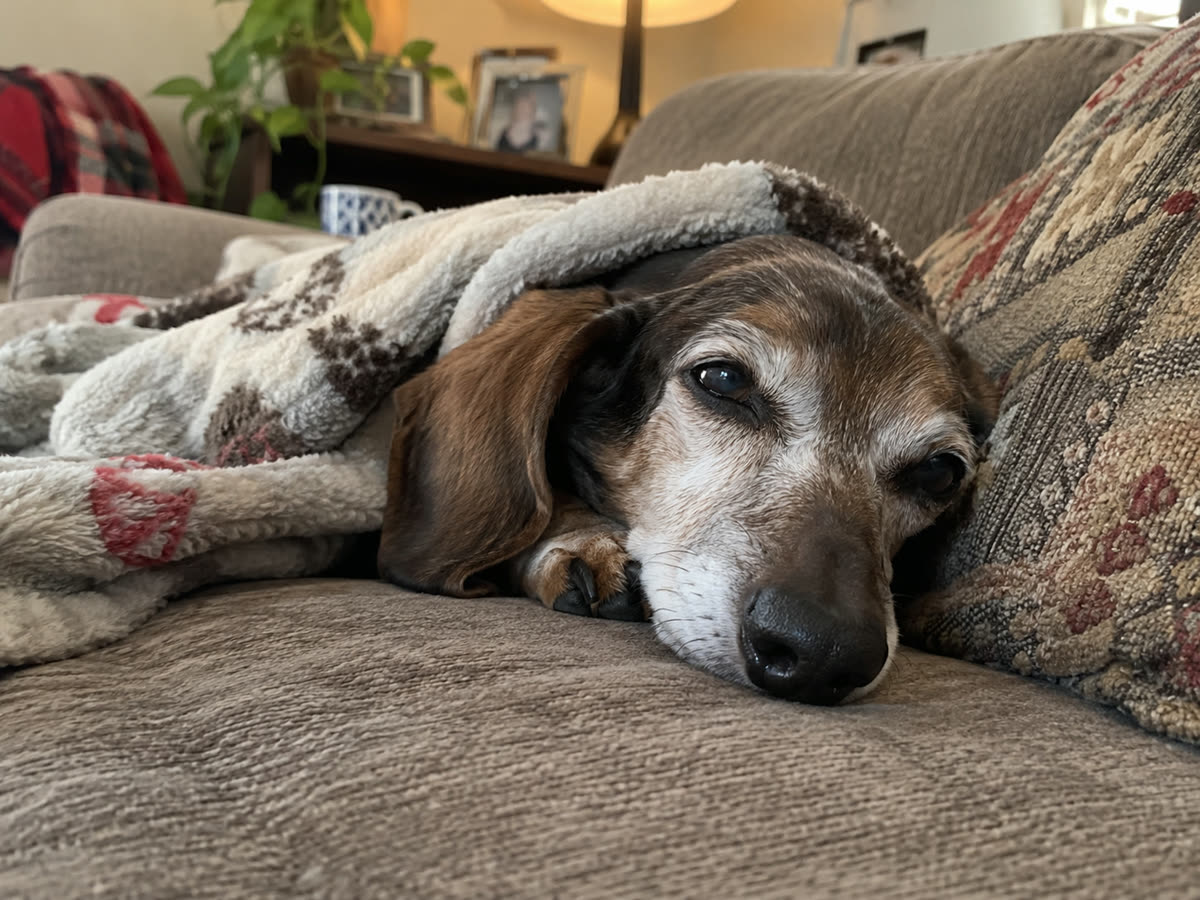
So what is dog sundowning, really?
"Sundowning" is a word borrowed from human dementia care. It means the confusion and restlessness get worse as the evening comes on. In dogs, it's usually part of something called cognitive dysfunction syndrome, or CDS. That's the doggie version of dementia, and it's often compared to Alzheimer's in people.
I know "dementia" is a heavy word. But it's common, it usually comes on slowly, and there's a lot you can do to help. About a quarter of dogs aged 11 to 12 show signs of it, and about two-thirds of dogs aged 15 to 16.
Here's the thing: most of these dogs never get diagnosed. In one internet survey, more than 85% of the dogs with signs of it hadn't been. Owners figure it's just old age. Please bring it up with your vet.
The signs I ask about
Vets group the signs under the letters DISHAA. You don't need to remember them. Here's what they look like at home:
- Disorientation. Getting lost in his own house, stuck in corners or behind furniture, staring into space.
- Interactions. Suddenly clingy, or suddenly wants to be left alone. He may not greet familiar people the way he used to.
- Sleep and waking. Up at night, asleep all day. Families often notice this one first.
- House soiling. Accidents from a dog who's been house-trained for years.
- Activity. Less interest in play, or more pacing and wandering.
- Anxiety. New fears, restlessness, a shorter fuse.
Sleeping all day and restless all night is one of the most common signs I see.
Before we call it dementia, I rule out everything else
There's no single test for dementia. Vets call it a diagnosis of exclusion, which just means we check for everything else first. Plenty of things can keep an old dog up at night:
- Pain. Sore joints or a sore back make it hard to get comfortable, so he gets up, circles, and tries again.
- Needing to pee. Kidney disease, a bladder infection or a hormone problem can all mean more trips out. If he's drinking more too, measure it first: here's how to tell if your dog is drinking too much water.
- Losing sight or hearing. The dark is a lot more confusing when your eyes and ears aren't what they were.
- High blood pressure, or a problem in the brain itself.
So when an older dog starts waking and pacing, I start with a full exam, bloodwork, a urine test and a blood pressure check. I check his vision too. That's a big one. Sometimes the next step is an MRI of the brain, to rule out things like a tumor. That's a bigger step, and every vet's a little different on when to go there. There's no wrong way here.
One more clue: dementia creeps. A sudden head tilt, circling or falling over points to something else. Vestibular disease, a sudden balance problem, often gets mistaken for dementia. That's worth a call to your vet today.
Start a night log before the visit
Your vet can't see 2 a.m. You can. (Here's what else to bring to the vet.) For a week or two, jot down the following, on paper or in WagNote's notes, where each one gets the date and time:
- What time he wakes up, and how long he's up.
- What it looks like. Pacing, barking, panting, staring, getting stuck. A short phone video of a bad stretch is worth a page of notes. Take it ahead of time, bring it to the visit on your phone, and go over the symptoms with your vet.
- Overnight potty trips and accidents. Did he actually pee when you took him out?
- The daytime too. How long he naps, any stiffness getting up, his appetite, and how much he's drinking.
Ask your vet for a dementia checklist you can score at home. A score now and one in a few months shows whether things are helping.
Keeping all of that straight on no sleep is hard. Honestly, that's why I built WagNote (full disclosure: it's my app). I kept seeing owners struggle to keep track of everything with conditions like this, so I put it all in one place.
What actually helps at night
You can start tonight.
Make the days busier. To reset his clock: more contact and daylight during the day, a dark room at night. A walk right before bed helps some dogs sleep longer and deeper.
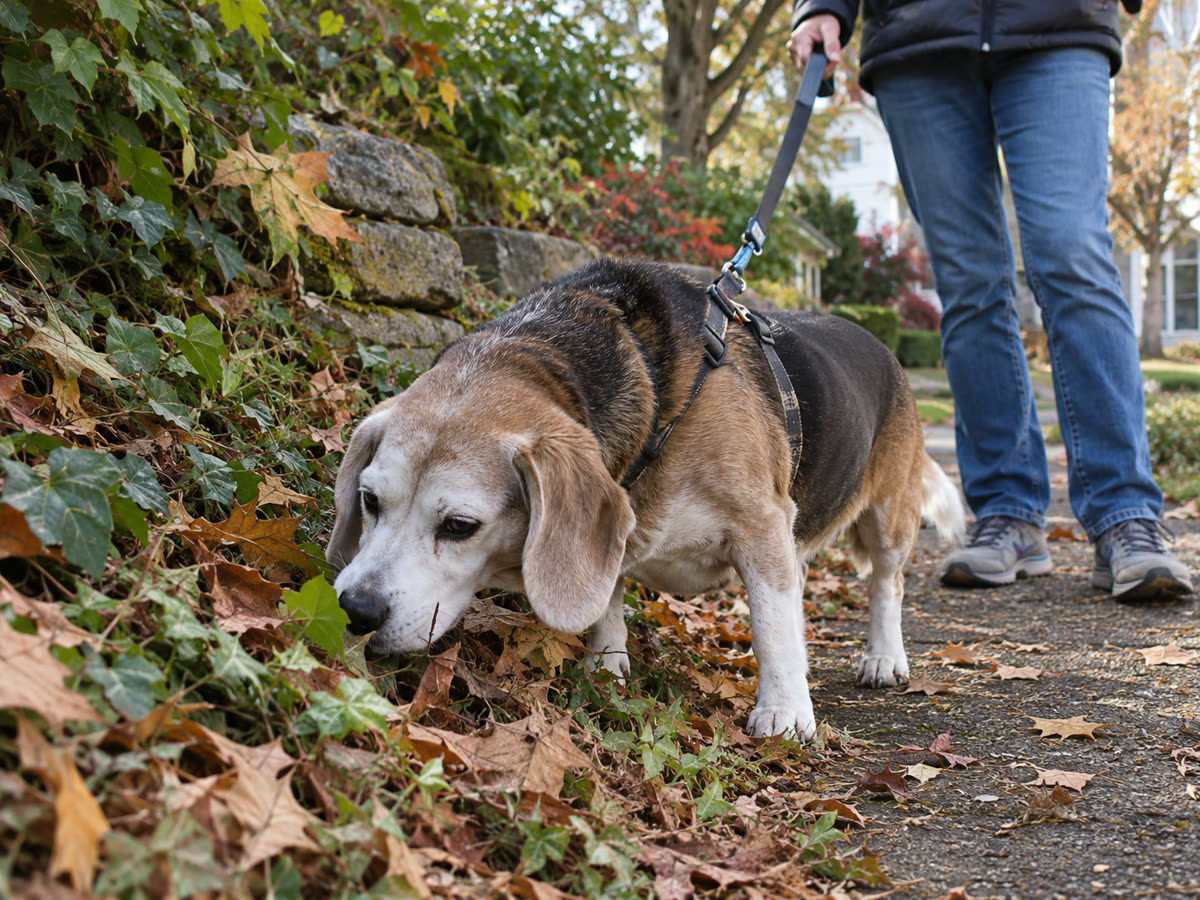
Work his brain, too. Keeping his mind busy can slow things down. Nothing fancy: a slow sniff walk, a food puzzle or snuffle mat, a simple new trick. Noses usually outlast eyes and ears, so lean on his.
Keep everything the same. Meals and walks at the same times, the bed in the same spot, the bowls where they've always been. If you've ever been five minutes late with dinner, you already know your dog can tell time. With dementia, that routine is a map he can still follow.
Dark bedroom, lit path. Keep his sleeping spot dark and quiet. Then put a dim night light in the hallway, by the water bowl and by the door he uses to go out. A wandering dog can see where he's going and is less likely to get stuck.
Block the traps. Gate the stairs. Close off the gap behind the couch and any other spot he wanders into and can't back out of.
One last potty trip. Take him out right before bed, and expect more trips out than he used to need.
When he's up pacing, stay calm. Guide him back to bed quietly and reward him for lying down. Don't scold him. Scolding adds worry, and worry makes the whole thing worse.
And check his tag and microchip details. A confused dog who slips out the door may not find his way back.
The treatment options your vet may bring up
I'll be straight with you: medicine-wise, there isn't that much out there for sundowning. None of these cure CDS. They can ease the signs or slow things down, and they work best started early. Here are the names you'll hear. Your vet picks what fits your dog.
- Anxiety medicine. Trazodone or another mild anti-anxiety or sedative medicine is most of what's out there. If worry is a big part of the night-time picture, short-acting options such as trazodone or alprazolam are where I usually start.
- Selegiline (Anipryl). The one drug approved in North America for dementia in dogs. It helps a lot of dogs, but not every dog. Some owners see a change within three weeks, but many dogs take about six.
- Prescription brain diets. Some may help. There used to be one from Hill's called b/d, but it's been discontinued in the US. Hill's now makes a prescription food called Brain Care + j/d, which pairs brain support with joint support. Diets like these add antioxidants, omega-3s or a special kind of fat called medium-chain triglycerides, and they work best paired with keeping his brain busy. Ask your vet whether one fits your dog.
- Supplements. A few have some evidence behind them, such as SAMe or phosphatidylserine, but the research is limited overall.
- Pain medicine. That's a thought too. If he's pacing, he could be painful. Pain in dogs is very variable: some sleep more, some pace more, some get vocal, some go quiet. It depends on the dog. If it's out of his ordinary, pain may be worth considering.
- Melatonin. It helps some dogs, but there aren't many studies, so check with your vet first.
One heads-up: selegiline doesn't mix safely with some other medicines. That includes other antidepressants, opioid pain medicines, and phenylpropanolamine, a medicine often used for leaking urine. So tell your vet about everything your dog takes, supplements included.
Treatment starts with the home changes, so you can start those tonight and bring the rest to your vet. Beyond that, honestly, I don't have many suggestions for sundowning. It's difficult. Every vet's a little different, and yours may have ideas that fit your dog.
If you do one thing this week: start the night log, even if it's just times scribbled on a sticky note by the bed, or tapped into WagNote while you're up anyway. Your vet will love you for it. Your dog will just want breakfast.
What to track at home
- Night waking Write down what time he wakes and how long he's up. Fewer, shorter wake-ups is what we want to see.
- What the episodes look like Pacing, barking, panting, staring or getting stuck. A short phone video helps your vet more than you'd think.
- Night-time potty trips Did he actually pee when you took him out? Accidents and extra trips can point to a bladder, kidney or hormone problem.
- Daytime naps and stiffness Long naps and stiffness getting up are part of the picture. Pain can keep a dog up at night.
- Appetite and water Changes here can come with dementia, and also with other problems your vet will want to check.
Questions to ask your vet
- What else could be causing this, and which tests would you start with?
- Could pain be part of what's keeping my dog up at night?
- Can we check his vision as part of the workup?
- Is there a checklist I can score at home now, and again in a few months?
- Would an anxiety medicine, selegiline or a prescription brain diet make sense for my dog?
- Can the medicines and supplements my dog already takes be combined with what you're suggesting?
- How often should we recheck?
When to call your vet
Call your vet if your older dog starts waking and pacing at night, or if you notice new accidents in the house, more drinking or peeing, circling, getting stuck, staring at walls, eating less, weight loss, coughing, or signs of pain. A behavior change in a senior dog deserves a checkup, not a shrug.
Call too if your dog seems worse after starting a new medicine or supplement. You don't have to wait for the next recheck.
Call your vet or an emergency clinic now if
Call your vet or an emergency clinic now if your dog has a seizure, collapses, suddenly can't stand, presses his head against a wall, has pale or blue gums or trouble breathing, or is pacing with a swollen, tight belly and retching that brings nothing up. Call right away too if he might have eaten something toxic.
Sources
- Behavior Problems of Dogs: Aging and Cognitive Dysfunction, Merck Veterinary Manual (full review Sept 2025)
- Managing Cognitive Dysfunction and Behavioral Anxiety, 2023 AAHA Senior Care Guidelines for Dogs and Cats (published 13 Dec 2022)
- Senior dog dementia, Cornell University College of Veterinary Medicine, Riney Canine Health Center
This is general education from a veterinarian, not advice for your pet. I haven't examined your pet, and only your own vet can. If your pet is in distress, call your vet or an emergency clinic now. Medical disclaimer.